
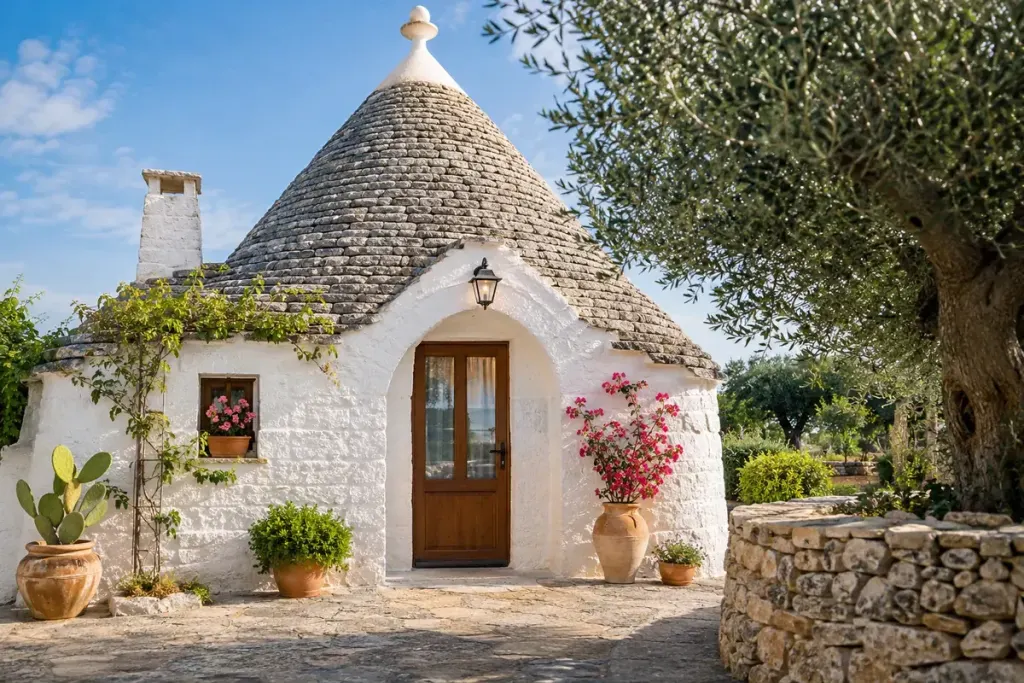
A conical stone roof can make a holiday listing instantly recognisable. Staying in a trullo, however, means using a particular converted building, not booking a standard room type with identical features everywhere.
UNESCO’s account of the trulli of Alberobello describes limestone buildings with corbelled roofs, thick walls and relatively small openings. It explains the architecture; it does not certify the comfort, access or services of every accommodation advertised with the name.
Find out which building is yours
Ask for photographs and a floor plan of the exact unit you would reserve. A listing may present several properties together. An appealing communal courtyard or spacious bedroom in the gallery does not establish that both belong to your booking.
Look for changes in floor level, internal steps, doorway dimensions and the route between bed and bathroom. If mobility is a concern, describe the actual requirement to the host. “Accessible” is less informative than a clear answer about the entrance, shower and any internal thresholds.
Check where the modern facilities have been fitted. Confirm heating or cooling for your travel dates, bathroom privacy and the kitchen equipment if you plan to cook. Traditional construction and a successful conversion are different aspects of the stay.
Rehearse the arrival with luggage
Use the host’s directions to work out where a vehicle can stop, where it must be parked and how far luggage has to travel. Ask whether check-in occurs at the unit or at a separate reception. Save the meeting instructions before setting off, especially if the address is among similar-looking buildings.
For a rural property, also check how you will reach food shops and evening meals. A quiet setting may be exactly what you want, provided the transport plan matches it.
The distinctive roof will still be there once the booking questions are answered. Knowing how the rooms and arrival actually work lets you enjoy the architecture without discovering an avoidable practical problem after you have unpacked.