
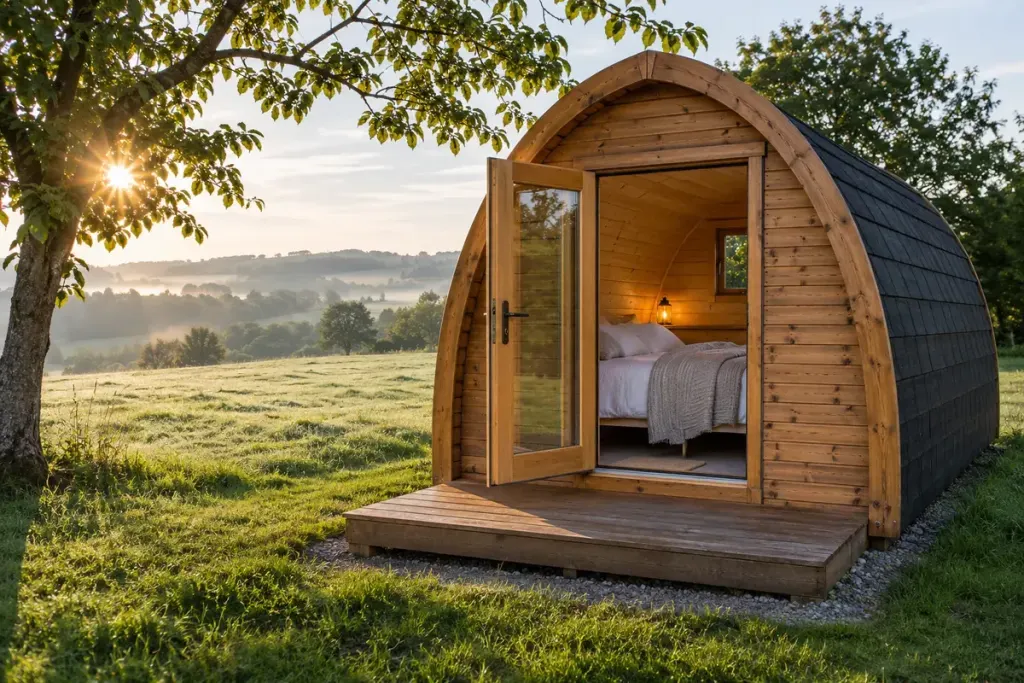
A timber pod can look like a miniature cabin in a booking photograph. Inside, it might provide a fitted bed and useful facilities, or it might be a sheltered space where you bring much of your camping equipment. The word “pod” does not settle the packing list.
The Camping and Caravanning Club’s pod information, for example, tells guests to bring camping gear, including a camping bed, while leaving the tent behind. That is one operator’s arrangement, not a rule for every pod sold elsewhere.
Check four practical details
- Sleeping: is there a bed or only floor space, and are a mattress, linen and pillows included?
- Washing: are the toilet and shower inside, nearby or in a shared facilities block?
- Cooking: which facilities are provided, and where is cooking permitted?
- Comfort: what lighting, power and heating are supplied, and what restrictions apply?
Ask about the specific unit type you intend to book. A site may offer both simple pods and more extensively equipped accommodation, with photographs mixed across the listing.
Turn the answers into a bring-or-provided checklist. For an illustrative two-night stay, finding that bedding is not included changes both luggage volume and arrival preparation. Discovering it after the site shop closes is a much less convenient way to learn the distinction.
Plan the trip between the pod and the facilities
Consider the path to the washroom after dark, footwear for wet ground and any access requirements. Ask the operator about steps, door widths or other relevant features instead of inferring accessibility from a photograph of a level lawn.
Keep the site’s cooking and fire rules with the booking details. Never bring a barbecue or unsuitable fuel-burning appliance inside a pod; shelter does not make such use safe.
Finally, confirm check-in arrangements and what must be cleaned or returned at departure. A clear description can make a simple pod a very comfortable choice. The important part is knowing which comforts are waiting there and which ones must travel with you.