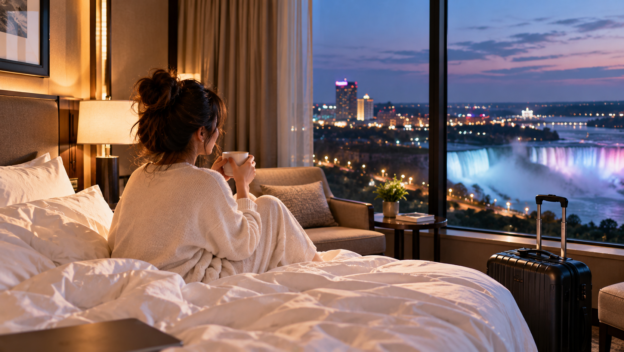
The hotel looked perfect online.
The reviews were strong.
The room was clean.
The bed was comfortable.
The location was convenient.
Nothing was obviously wrong.
Yet sometime after midnight, you were still awake.
An elevator chimed outside.
Someone rolled a suitcase down the hallway.
A door slammed.
Water rushed through pipes behind the wall.
Guests returned from a night out.
Then, just as everything became quiet, a delivery truck appeared on the street below.
This is one of the most overlooked parts of choosing accommodation.
Travelers spend hours comparing hotels, but very little time thinking about hotel room location inside the property itself.
Two guests can book the same room category at the same hotel on the same night and have completely different experiences simply because their rooms are in different places.
One sleeps peacefully.
The other hears every movement in the building.
A good hotel can still contain rooms that are better suited to different types of travelers.
Understanding what affects room location can help you make smarter requests before check-in—and know what to ask for when sleep matters more than the view.
The Hotel Location Is Only Half the Location Question
Travelers naturally think about where a hotel sits within a city.
Near downtown?
Close to attractions?
Near public transportation?
Walking distance from restaurants?
Those questions matter.
But once you choose the property, there is another location decision:
Where will your room be inside that property?
Hotels are active buildings.
They contain elevators, stairwells, housekeeping areas, mechanical equipment, restaurants, kitchens, event spaces, parking areas, entrances, service corridors, and other guest rooms.
Your distance from those areas can affect what you hear and how much activity passes your door.
Room Category Does Not Tell You Everything
You may book:
King Room.
Double Queen.
Deluxe Room.
City View.
Standard Room.
Suite.
That describes certain room features.
It does not necessarily tell you where the room will be located.
Several rooms of the same category may exist throughout the property.
One may face a quiet side street.
Another may overlook a busy road.
One may be far from the elevator.
Another may sit directly beside it.
The reservation can technically be identical while the experience is very different.
Start With What Actually Disturbs Your Sleep
Before requesting a room, think about what bothers you most.
Different travelers have different sensitivities.
Some can sleep through traffic but wake immediately when someone talks in the hallway.
Others do not care about corridor noise but struggle with mechanical humming.
Some need complete darkness.
Others care more about temperature.
There is no universally perfect hotel room.
The useful question is:
What kind of room gives you the best chance of sleeping well?
Elevators Are Convenient—Until You Hear Them All Night
A room close to the elevator can be extremely convenient.
You step out.
Your room is right there.
No long walk carrying luggage.
For guests with mobility considerations, this proximity may be useful or necessary.
But elevators can also create activity.
People gather while waiting.
They talk.
Children press buttons.
Guests return late at night.
Suitcases roll across the floor.
The elevator itself may produce sounds.
If hallway noise easily wakes you, requesting a room farther from the elevator may help.
But “Far From the Elevator” Has a Trade-Off
Imagine a large hotel corridor.
Your quiet room is at the very end.
Great for reducing passing traffic.
Less great when you are exhausted after walking all day and still have a long corridor between the elevator and your room.
This matters particularly for travelers with mobility limitations, older guests, families carrying equipment, or anyone who expects to enter and leave frequently.
A quieter room is not automatically a better room if reaching it becomes inconvenient.
Ice Machines Can Create Unexpected Noise
An ice machine seems harmless.
Until your room is beside one.
Guests may use it at different hours.
Ice drops.
The machine cycles.
Doors open and close.
People stop nearby to talk.
The same can apply to vending areas and other shared facilities.
If you are sensitive to intermittent noise, being directly beside these areas may not be ideal.
Housekeeping Areas Have Their Own Rhythm
Housekeeping needs somewhere to operate.
Carts move.
Supplies are stored.
Linens are handled.
Staff members begin working.
For travelers who wake early, this may never matter.
For someone hoping to sleep late after arriving at 2:00 AM, morning activity near a housekeeping area can feel much more noticeable.
Hotels need these operational spaces.
The practical consideration is simply whether your room is positioned close to one.
Stairwells Can Be Quiet—or Surprisingly Active
A stairwell may appear to be a good neighbor.
There is no elevator traffic.
No vending machine.
No lobby.
But stairwell doors can be heavy.
Heavy doors can close loudly.
In some properties, stairs receive little guest traffic.
In others, they are used regularly.
Again, building layout matters.
There is no single rule that works for every hotel.
Connecting Rooms Can Affect Sound
Connecting rooms are extremely useful for families and groups.
A door between rooms makes staying together much easier.
But if you do not need a connecting room, the connecting doorway may sometimes allow more sound transmission than a solid uninterrupted wall.
How noticeable this is depends heavily on the property, door construction, and neighboring guests.
If noise sensitivity is a major concern, you can ask whether a non-connecting room is available.
Your Neighbor Matters More Than the Floor Plan
Even the quietest room location cannot guarantee silence.
A normally peaceful room can become noisy if the neighboring guests are loud.
A room near the elevator may be completely fine on a quiet night.
Hotel room requests improve your odds.
They do not create certainty.
This distinction matters because travelers sometimes treat room-selection advice as a formula.
Hotels are dynamic environments occupied by real people.
Street-Facing Rooms Come With a Different Soundscape
A room facing the street may provide:
A better city view.
More natural activity.
Interesting scenery.
Convenient orientation.
But streets also contain:
Traffic.
Motorcycles.
Sirens.
Pedestrians.
Nightlife.
Deliveries.
Garbage collection.
Construction.
The importance of this depends on the destination and the specific street.
A busy urban road behaves differently from a quiet residential street.
Higher Floors Can Reduce Some Street Noise
Distance can help.
Moving several floors above street level may reduce how immediate traffic and pedestrian noise feels.
That is one reason noise-sensitive travelers often request a higher floor.
But higher does not automatically mean silent.
Sound can travel upward.
Tall buildings may face other buildings that reflect noise.
Rooftop equipment can create a completely different issue.
A higher floor is a preference, not a guarantee.
Higher Floors May Have Other Advantages
Depending on the property, higher floors may provide:
Better views.
More privacy.
Less pedestrian visibility.
Less immediate entrance activity.
Potentially less street-level noise.
For many travelers, these are attractive benefits.
But they need to be balanced against other considerations.
Lower Floors Can Be More Practical
Lower floors may offer quicker access to:
The lobby.
Exits.
Parking.
Hotel facilities.
Outdoor areas.
They may also reduce dependence on elevators.
For some travelers, convenience matters more than elevation.
Families moving frequently between the room and vehicle may prefer easy access.
Travelers with specific accessibility needs may also have different priorities.
Top Floor Does Not Always Mean Best Floor
It sounds logical:
Nobody is above you.
Therefore, top floor equals quietest room.
Sometimes that works beautifully.
No footsteps overhead can be a meaningful advantage.
But a top floor can also be closer to rooftop mechanical systems or other building equipment depending on the property.
So rather than asking blindly for “the highest possible room,” you can ask for a quiet room and allow hotel staff to use their knowledge of the building.
Hotel Staff Know Things the Booking Page Cannot Tell You
This is an important point.
A booking engine sees inventory.
Hotel employees know the building.
They may know that one side is quieter.
One corridor has less traffic.
Certain rooms are near an event space.
Some floors receive more elevator activity.
A particular section faces the parking area.
If quietness matters, a simple request can sometimes be more useful than trying to reverse-engineer the building from an online room map.
Ask for the Outcome, Not Just a Room Number
Instead of saying:
“I want Room 504.”
You may get better results by saying:
“I’m a light sleeper. If possible, I’d appreciate a quieter room away from elevators and high-traffic areas.”
Now staff understand the reason behind the request.
If Room 504 is unavailable, they can potentially choose another room that serves the same purpose.
The goal is sleep.
Not a particular number on a door.
Requests Are Usually Requests, Not Guarantees
This deserves emphasis.
You can request:
High floor.
Low floor.
Quiet side.
Away from elevator.
Non-connecting room.
Specific view.
But hotel occupancy and room availability can change.
A guest may extend a stay.
A room may require maintenance.
A room category may be nearly full.
Another operational issue may affect assignments.
Make requests politely, but understand that not every preference can always be guaranteed unless the property specifically sells or confirms it as part of the reservation.
Don’t Create a List of Fifteen “Essential” Requests
Imagine receiving this:
Highest floor.
Far from elevator.
Near stairs.
No connecting door.
Corner room.
Specific direction.
Specific view.
Bathtub.
Early check-in.
Late checkout.
Near friends.
Away from ice machine.
Extra pillows.
Completely silent.
The more conditions you add, the harder it becomes to satisfy all of them simultaneously.
Prioritize.
What are the two or three things that genuinely matter?
A View Can Compete With Quietness
One of the most common trade-offs is view versus sound.
The room overlooking the lively entertainment district may have the most exciting view.
It may also face the lively entertainment district.
The quietest side of the building may overlook:
A courtyard.
Another building.
A parking area.
Something less photogenic.
Before paying more for a view, think about when you will actually use it.
How Much Time Will You Spend Looking Out the Window?
On some trips, the room itself is part of the experience.
A honeymoon.
A resort stay.
A special anniversary.
A scenic getaway.
Then a beautiful view may be worth prioritizing.
On another trip, you leave after breakfast and return exhausted at midnight.
You spend seven waking minutes looking through the window.
In that situation, paying for a premium view while sacrificing sleep may make less sense.
Your room priorities should match the trip.
Families Have Different Room-Location Priorities
Parents traveling with young children may value:
Easy elevator access.
Shorter walks.
Space.
A bathtub.
Proximity to certain facilities.
A quieter corridor.
But some of these goals conflict.
A room close to an elevator reduces walking but may increase passing traffic.
A room at the end of the hallway may be quieter but require carrying a tired child farther.
There is no universal family room location.
Choose based on your routine.
Think About Nap Time
Families with babies or young children may return to the room during the day.
That changes the noise question.
A hotel that becomes quiet at midnight may still have significant daytime activity.
Housekeeping.
Guests leaving.
Doors opening.
Maintenance.
If daytime sleep matters, mention that when requesting a quieter room.
Business Travelers Often Need Predictability More Than Scenery
If you have a presentation at 8:00 AM, a beautiful view at midnight is probably less important than sleeping.
Business travelers may benefit from prioritizing:
Quietness.
Reliable room temperature.
A comfortable workspace.
Easy morning departure.
Proximity to the elevator if leaving with luggage.
Again, the “best” room depends on what happens the next day.
Late Arrivals Need Different Planning
You arrive at the hotel after midnight.
You are exhausted.
At that point, discovering your room sits above a busy event area can be frustrating.
If you know your flight or drive arrives late, consider noting your preference for a quiet room in advance.
Also remember that late arrival may reduce room-assignment flexibility if many other guests have already checked in.
Early Check-In Can Affect Room Choice
You arrive early.
The hotel has one room ready.
It is available immediately.
But perhaps another room better matching your preferences will not be ready until standard check-in time.
Now you have a choice.
Take the available room.
Or wait.
Travelers sometimes become frustrated because they want both early access and the ideal room location.
Those goals may conflict when occupancy is high.
Decide Which Matters More
If you desperately need a shower before an event, early room access may be the priority.
If you are staying four nights and are a very light sleeper, waiting for a quieter room may be worthwhile.
This is why understanding your priorities before reaching the desk helps.
You can make decisions rather than reacting to whatever happens.
The Lobby Can Create More Activity Than Expected
Rooms near the lobby or main circulation areas may experience more movement.
Guests arrive.
Groups gather.
People wait for transportation.
Staff communicate.
Doors open.
Luggage moves.
Depending on the hotel’s design, some of that activity may travel toward nearby rooms.
For travelers who enjoy easy access and do not mind activity, this can be perfectly acceptable.
For light sleepers, it may not be ideal.
Restaurants and Bars Change Throughout the Day
A restaurant may be completely quiet at 3:00 PM.
Then dinner begins.
A bar may become active at night.
Breakfast service may begin early in the morning.
If your room sits above, below, or near these facilities, your experience may change depending on operating hours.
Think about when the area is active, not only what it looks like when you check in.
Event Spaces Can Transform a Quiet Hotel
You arrive Friday afternoon.
The property feels peaceful.
Saturday evening, there is a wedding.
Music begins.
Guests gather.
The ballroom becomes active.
Hotels that host meetings, celebrations, conferences, or other events can change character throughout a stay.
If you are particularly noise-sensitive, asking about a quiet room away from event areas can be reasonable.
Parking Lots Have Their Own Noise
Parking-facing rooms are sometimes considered quieter than street-facing rooms.
They can be.
But parking areas also produce:
Car doors.
Engines.
Alarms.
Conversation.
Early departures.
Late arrivals.
Headlights.
The effect depends on how busy the parking area is and how close it sits to the rooms.
No side of a hotel is automatically perfect.
Loading and Service Areas Wake Up Early
Guests may not notice a hotel’s service entrance.
The hotel certainly does.
Deliveries arrive.
Waste is collected.
Supplies move.
Kitchen operations begin.
A room overlooking a service area may be quiet for most of the evening and then become active early in the morning.
If you are planning to sleep late, this type of timing matters.
Mechanical Noise Is Different From Guest Noise
Guest noise is unpredictable.
Someone talks loudly for five minutes and disappears.
Mechanical noise can be steady.
Fans.
Ventilation.
Pumps.
Elevator machinery.
HVAC equipment.
Some sleepers tolerate consistent background sound better than intermittent voices.
Others find a low mechanical hum impossible to ignore.
Know which category bothers you more.
Your Own Room Can Be the Source of the Problem
Not every bad night’s sleep is caused by room location.
Sometimes the room itself has an issue.
HVAC rattles.
The refrigerator cycles loudly.
Curtains do not fully block outside light.
A vent whistles.
A bathroom fan makes unusual noise.
The thermostat creates uncomfortable temperature swings.
Do not assume you simply have to tolerate a malfunction.
If something seems abnormal, contact the front desk.
Report Problems Early
You notice the air-conditioning makes a loud grinding sound at 5:00 PM.
Do not wait until 1:30 AM when you finally decide it is unbearable.
Reporting it early gives the hotel more opportunity to:
Inspect it.
Repair it.
Offer another solution.
Potentially move you if appropriate and available.
The later a problem is reported, the fewer options may remain.
Don’t Unpack Completely Before Checking the Room
For travelers who are highly particular about room conditions, a quick inspection after arrival can save hassle.
Before emptying the entire suitcase, check:
General cleanliness.
Temperature.
Obvious noise.
Bathroom condition.
Bedding.
Any important amenities you specifically booked.
If there is a genuine issue, it is much easier to discuss it before your belongings are spread across every surface.
Spend Five Quiet Minutes in the Room
Turn off the television.
Stop talking.
Listen.
Can you hear the elevator?
Mechanical equipment?
A loud venue below?
Constant hallway activity?
This does not predict the entire night.
But it can reveal obvious problems.
If something concerns you, asking early is better than waiting until you are already trying to sleep.
Room Changes Are Easier Before the Hotel Fills
Hotels can have limited flexibility, especially during busy periods.
If you believe there is a legitimate room issue, contact staff sooner rather than later.
Do not wait until every remaining room has been assigned.
A polite early conversation creates more possibilities than an angry late-night complaint.
Not Every Sound Means the Room Is Bad
Hotels are shared spaces.
Complete silence may not be realistic.
Doors occasionally close.
Guests occasionally walk through hallways.
Plumbing operates.
Buildings make sounds.
The useful distinction is between ordinary hotel activity and persistent disruption that materially affects the stay.
Expecting a hotel to function like an isolated private house can create unrealistic expectations.
Earplugs Can Be Useful—but They Shouldn’t Excuse Serious Problems
Light sleepers often travel with earplugs.
That is practical.
A white-noise application or familiar sleep routine may also help.
But personal preparation does not mean you should ignore an unusually disruptive room condition.
There is a difference between managing ordinary environmental sound and trying to sleep beside a malfunctioning machine.
White Noise Can Reduce Intermittent Distraction
Some travelers find consistent background sound helpful because it masks sudden hallway noises.
A fan or white-noise source can make isolated sounds less noticeable.
But volume should remain comfortable and safe.
The goal is not to overpower the hotel with even more noise.
It is to create a more consistent sound environment.
Temperature Can Matter as Much as Noise
A quiet room can still produce poor sleep if it feels too warm or cold.
Hotel climate systems vary.
Some react quickly.
Others take time.
When you arrive, check whether the room reaches a comfortable temperature rather than discovering the problem at bedtime.
If the system does not appear to function normally, report it.
Don’t Make Extreme Thermostat Changes Immediately
Setting the thermostat to an extreme temperature does not necessarily make the room reach your preferred temperature faster.
Depending on the HVAC system, it may simply create an uncomfortable environment later.
Choose a reasonable setting and give the system time to respond.
If nothing changes, then contact the hotel.
Light Is Part of Room Location Too
Street-facing rooms may receive:
Streetlights.
Vehicle headlights.
Building illumination.
Signs.
Early morning sunlight.
Even with curtains, some light may enter around edges.
Travelers who need darkness should check blackout curtains and close them properly.
Small clips or other travel solutions can sometimes help with gaps, provided nothing is damaged.
Morning Sun Can Be Either Wonderful or Terrible
You want to wake naturally at 6:30 AM?
Morning sunlight can feel great.
You arrived after a long flight and plan to sleep until 10?
That same sunrise becomes less charming.
Room orientation can affect morning light, although travelers may not always be able to request or guarantee a specific direction.
Again, priorities matter.
Check the Alarm Clock
It is a classic hotel surprise.
A previous guest set an alarm for 5:15 AM.
Nobody cleared it.
You discover this at exactly 5:15 AM.
If the room contains a physical alarm clock, check it before sleeping.
It takes seconds.
Those seconds may protect a very important morning.
Your Phone Creates Its Own Hotel Sleep Problems
You finally get the perfect quiet room.
Then your phone lights up every eight minutes.
Travel often changes routines.
Different time zones.
Late messages.
Travel alerts.
Work notifications.
Before blaming the room for poor sleep, create a sleep environment inside it too.
Use appropriate notification settings and charging placement.
Jet Lag Cannot Be Fixed by a Better Room Number
A quieter room helps.
But if your body thinks it is 3:00 PM when the local clock says midnight, sleep may still be difficult.
International travelers should separate environmental problems from circadian disruption.
The hotel room can support sleep.
It cannot instantly reset your body clock.
Long Travel Days Can Make You More Sensitive
After a delayed flight, long drive, missed meal, and stressful check-in, even minor sounds can feel unbearable.
Fatigue changes perception.
This is another reason to reduce avoidable friction.
Prepare your essentials.
Know your reservation details.
Communicate important preferences in advance.
The less energy spent solving logistics, the easier it may be to settle.
One-Night Stays Need Different Priorities
If you are staying one night before an early flight or road departure, convenience may dominate.
Quick access.
Easy parking.
Simple checkout.
Reliable sleep.
You may not care about:
The view.
The largest room.
Proximity to leisure facilities.
Your ideal hotel room depends on the purpose of the stay.
Longer Stays Make Small Annoyances Bigger
A slightly inconvenient room may be fine for one night.
For seven nights, the same issue can become frustrating.
Long walk to the elevator.
Poor natural light.
Constant afternoon noise.
Limited storage.
An awkward workspace.
For longer stays, think beyond the first impression.
Imagine living in the room repeatedly.
Couples May Have Opposite Sleep Preferences
One partner wants complete silence.
The other likes background sound.
One needs the room cold.
The other wants warmth.
One wakes with sunrise.
The other wants total darkness until noon.
The hotel cannot solve every incompatibility.
Discuss preferences before the trip.
A few small preparations can prevent the room itself from becoming the subject of an argument.
Groups Should Not Assume Nearby Rooms Are Automatic
Friends or families booking multiple rooms often expect them to be next door.
That may not always be possible.
If proximity matters, request it early.
But understand the trade-off.
Keeping several rooms together may reduce the hotel’s ability to satisfy everyone’s separate floor, view, or quietness preferences.
Decide which goal matters most.
Accessible Room Needs Should Be Communicated Clearly
Accessibility is not merely another preference like wanting a high floor.
If you require specific accessible room features, make sure the reservation reflects what you actually need and confirm relevant details directly with the property when appropriate.
Different travelers require different features.
Do not rely on assumptions based solely on a generic room photograph.
Functional needs deserve clear communication.
Don’t Request an Accessible Room Merely Because You Think It Is Larger
Accessible inventory exists to support travelers who need those features.
If you do not require them, there is little reason to target those rooms simply because you heard they might provide additional space.
Book based on your actual needs.
Reviews Can Reveal Patterns—But Read Them Carefully
A review says:
“Extremely noisy hotel.”
Another says:
“Best sleep I’ve had all year.”
Who is right?
Possibly both.
They may have stayed:
On different floors.
On different sides.
During different events.
With different neighboring guests.
At different times of year.
Individual reviews provide experiences, not universal laws.
Look for repeated patterns rather than one dramatic comment.
Search Reviews for Specific Problems
Instead of only reading overall scores, look for recurring mentions of:
Noise.
Traffic.
Elevators.
Air conditioning.
Nightlife.
Construction.
Thin walls.
Parking.
Events.
If multiple unrelated guests describe the same issue, it may be worth considering.
But always check dates.
Conditions can change.
Construction Information Can Become Outdated Quickly
A review from two years ago complains about nearby construction.
That project may be finished.
Another review from last month mentions renovation.
That may matter much more.
For issues that can change, recent information is more useful than historical complaints.
Hotel Renovations Can Affect Room Experience
Renovation does not automatically make a hotel a poor choice.
It may affect only certain sections.
Work may happen only during specified hours.
But if you plan to spend daytime hours in the room, construction activity could matter more to you than to a traveler who leaves every morning.
When relevant, ask the property about the current situation.
Season Changes the Environment
The same hotel can feel different throughout the year.
Summer may bring:
More pedestrians.
Outdoor entertainment.
Open terraces.
Later activity.
Winter may change:
Heating patterns.
Road conditions.
Indoor crowding.
Season affects the environment surrounding the room.
A review from a different season may not perfectly represent your stay.
Weekends and Weekdays Can Feel Different
A business-oriented property may be busy during the week and calmer on weekends.
A leisure destination may do the opposite.
Nightlife may intensify Friday and Saturday.
Events may cluster around weekends.
If sleep is particularly important, consider the rhythm of the destination as well as the hotel itself.
Special Events Can Change Everything
Festivals.
Concerts.
Conferences.
Weddings.
Sporting events.
Holiday celebrations.
A normally quiet area can become very active during a major event.
Hotel occupancy also rises.
That reduces flexibility for room changes.
When traveling during major events, setting realistic expectations becomes even more important.
A Quiet Room Request Works Best When It Is Specific but Flexible
Compare:
“I demand your best room.”
With:
“I’m a light sleeper. If available, could I please have a quieter room away from the elevator or other high-traffic areas?”
The second gives useful information.
It explains what matters.
It leaves room for staff to find an appropriate option.
Specific goal.
Flexible solution.
That is usually a better approach.
Mention Preferences Before Arrival
You can often add a request when booking or contact the property before check-in.
Doing so does not necessarily guarantee fulfillment.
But it gives staff information before room assignment is finalized.
Waiting until you receive the key can make adjustments harder, especially on a busy night.
Repeat the Important Request Politely at Check-In
Reservations can contain many notes.
When checking in, there is nothing wrong with briefly confirming the preference.
Something simple:
“If possible, I’d still appreciate a quieter room. I’m a pretty light sleeper.”
No long explanation is necessary.
This gives staff another opportunity to consider the request.
Don’t Assume the Most Expensive Room Is the Quietest
Price may reflect:
Size.
View.
Floor.
Amenities.
Suite layout.
Premium features.
It does not necessarily reflect acoustic isolation.
A smaller room in a quiet section may suit a light sleeper better than a premium room facing the busiest part of the property.
Price and sleep quality are not the same metric.
Upgrades Can Have Trade-Offs
You receive an upgrade.
Great.
But before automatically accepting, consider what changed.
Perhaps the upgraded room has a spectacular view over a lively area.
Your original room was on a quiet side.
If quietness is your priority, you can ask where the upgraded room is located.
“Upgrade” means higher room category.
It does not guarantee that every characteristic better matches your personal preferences.
A Corner Room Can Be Attractive for a Reason
Depending on hotel design, a corner room may share fewer walls with other guest rooms.
That can be appealing.
It may also offer additional windows or a different layout.
But corner rooms vary by property.
Some may be close to stairwells.
Others may face two exterior noise sources.
Treat the idea as something worth asking about, not a universal travel hack.
End-of-Hall Rooms Can Reduce Passing Traffic
One intuitive advantage of an end-of-hall room is simple:
Fewer guests need to walk past it.
That can reduce corridor activity.
But the room may also be farther from elevators and hotel facilities.
For a healthy traveler who values quiet, that may be an excellent trade.
For someone with limited mobility, it may be the opposite.
Sleep Quality Is a Collection of Small Decisions
There is rarely one magic room request that guarantees a perfect night.
Instead, several small decisions add up:
Choose a property suitable for your trip.
Understand the surrounding area.
Prioritize your room preferences.
Request a quieter location when needed.
Check the room after arrival.
Address genuine problems early.
Manage temperature.
Control light.
Prepare for ordinary environmental sound.
Protect your own sleep routine.
Each step improves the odds.
Create a Personal Hotel-Room Priority List
Before your next trip, rank what matters.
For example:
- Quietness.
- Comfortable temperature.
- Easy elevator access.
- View.
- High floor.
Another traveler might rank:
- Accessibility.
- Proximity to elevator.
- Bathtub.
- Low floor.
- Quietness.
Neither list is wrong.
The ranking simply makes decisions easier when not every preference can be satisfied.
The Best Room Is the One That Fits the Trip
A romantic weekend may prioritize atmosphere and view.
A work trip may prioritize sleep and workspace.
A family trip may prioritize convenience and room configuration.
An overnight road trip may prioritize parking and easy departure.
A longer vacation may prioritize comfort and quietness.
Instead of asking:
“What is the best room in this hotel?”
Ask:
“What room characteristics matter most for this trip?”
That question produces much better decisions.
Conclusion
Booking a highly rated hotel does not automatically guarantee a perfect night’s sleep.
The property can be excellent while your specific hotel room location places you closer to elevators, street traffic, service areas, event spaces, mechanical equipment, or other sources of activity.
That does not mean travelers need to obsess over floor plans before every trip.
A few thoughtful decisions are usually enough.
Know what disturbs your sleep.
Prioritize the room characteristics that matter most.
Ask for a quieter location if you need one.
Understand that higher floors, end-of-hall rooms, non-connecting rooms, and rooms away from elevators can all have advantages—but also trade-offs.
Communicate important needs before arrival.
Check the room early.
And report genuine problems while the hotel still has the best opportunity to help.
The perfect hotel room is not necessarily the largest one, the highest one, or the one with the most impressive view.
Sometimes it is simply the room that lets you close the curtains, turn off the lights, and forget there is an entire hotel on the other side of the door.