
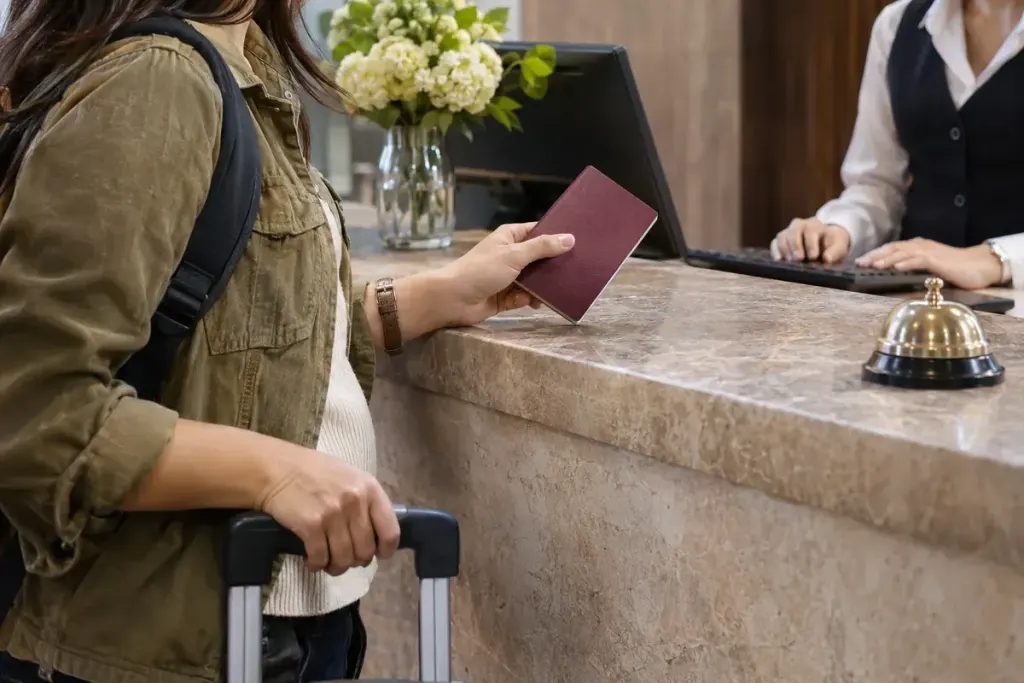
The reception queue is a poor place to discover that your chosen identification will not be accepted. A short check before travelling can clarify what the hotel needs and prevent an original document from disappearing into an unexplained administrative process.
Ask about the actual destination
Identification rules depend on the country and the guest’s circumstances. Hotels may also have procedures associated with the reservation and payment. Ask the property which documents it accepts for each adult guest and whether the original must be shown.
For example, Japan’s health ministry specifies passport presentation and copying for foreign guests without an address in Japan. That is a destination-specific requirement, not a rule for every hotel worldwide. Do not assume a photograph on a phone is an accepted substitute. The UK government’s destination-specific travel advice is one place to check document and local-law information relevant to your trip. Read the page for the country you are visiting, then confirm the hotel’s practical requirements directly.
Clarify the handling at the desk
If reception needs to record details or make a copy, ask what is required and when the original will be returned. Requirements differ; a general claim that hotels always may, or never may, retain documents is not a reliable travel rule.
For an illustrative late arrival, you might write to the hotel: “Two adults will arrive at about 22:00. Please confirm the accepted ID and whether check-in can be completed at reception that evening.” Keep the reply with the reservation details. This is especially useful if the booking name differs from the person who originally arranged it.
Use the hotel’s verified contact channel rather than sending a passport image to an address from an unexpected message. If advance document upload is requested, confirm the request and ask about the intended process before supplying sensitive information. Avoid posting identity documents in a group travel chat.
Before leaving the desk, check that all original documents are back with their owners unless a clearly explained, lawful arrangement requires otherwise. If something remains behind, obtain a receipt or written explanation and collection time. The next morning’s train or flight is easier to manage when the passport’s location is already settled.