
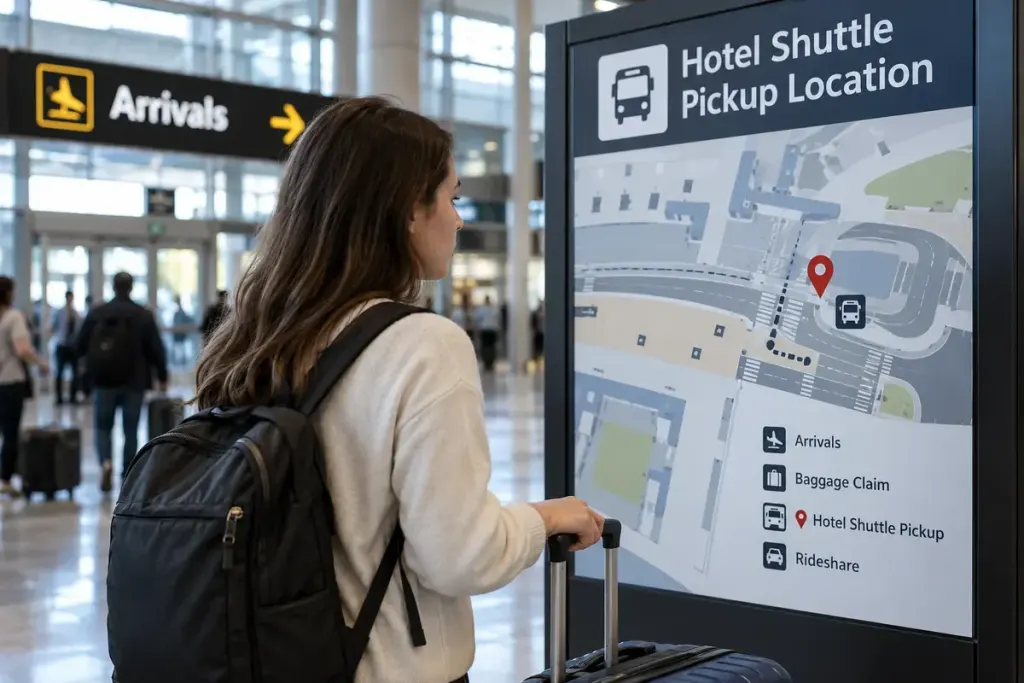
“Airport shuttle available” answers only one part of an arrival plan. It does not tell you which terminal the vehicle serves, whether you need to reserve a seat or what happens when a late flight lands after the last departure.
Contact the hotel through its verified booking channel and ask for the current shuttle instructions. Airports and hotels can change pickup arrangements, so an old review is useful as a question to investigate, not as a timetable.
Turn the promise into a route
Write down the terminal, exit, level and designated stop. Ask whether you walk directly there, telephone after collecting bags or wait for a named meeting service. Confirm the hotel name displayed on the vehicle and how to recognise the correct operator without giving booking details to strangers.
Keep the instructions offline. A screenshot showing only a pin may be less useful than the words “arrivals level, door X, hotel shuttle area,” using the actual details supplied by your hotel.
Check the edge cases before travelling
- Does the service run on your arrival date and at your expected time?
- Is it scheduled, on request or subject to a minimum booking?
- Is there a charge, and how is it paid?
- Can it accommodate your luggage and any access requirements?
- What is the plan if the flight is delayed?
For an early departure, confirm the return trip separately. “The airport journey takes twenty minutes” does not include waiting for the vehicle, visiting other hotels or walking from the drop-off point to the airline desk.
Keep one alternative transport option with an estimated cost range from a current official source. You do not need to book two journeys, but knowing the fallback reduces pressure when a service is unavailable. The useful confirmation is a specific pickup process for your journey, with a contact method and a realistic way to handle a change.