
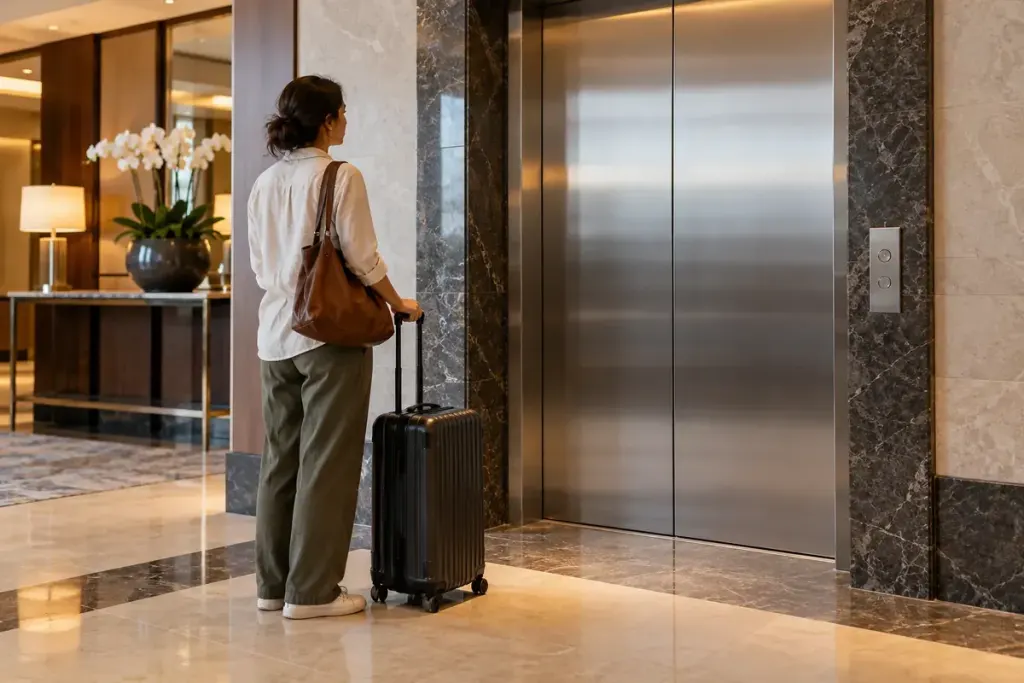
“The lift is temporarily unavailable” can sound like a small inconvenience until you discover that breakfast, your room and the street entrance are on different levels. Ask about the complete route you need to use, not just the floor printed on the room key.
Describe the access you require
Tell the hotel which parts of the stay depend on step-free access or manageable walking distances. You do not need to provide an unnecessary medical history to explain that stairs will not work. Ask whether there is another functioning lift and whether it reaches the same rooms and facilities.
A staff offer to carry bags may solve a luggage problem while leaving a person’s access problem unchanged. Similarly, a ground-floor room is not automatically useful if reaching the dining room or exit still requires steps.
Ask for a workable alternative
Before accepting a replacement room, confirm the route from arrival to room, bathroom, meals and departure. Ask whether the change affects the bed arrangement or other features you booked. If the hotel cannot provide a suitable stay, discuss relocation or cancellation options under the booking terms and applicable local rules.
Do not rely on an estimated repair time as a guarantee. Ask what the hotel will do if the lift remains unavailable at check-in, and obtain the agreed arrangement in writing through a verified hotel contact.
An example message can be brief: “I cannot use stairs. Please confirm a step-free route from the entrance to the proposed room and breakfast area, and the alternative if that route is unavailable.” This gives staff something specific to investigate.
If an outage happens during your stay, contact reception promptly and explain any immediate access difficulty. Emergency evacuation arrangements are a separate matter; follow the hotel’s safety instructions and do not assume an ordinary passenger lift will be available during an emergency.
A useful response names the actual route and arrangement. “We will help” is a welcome attitude, but it needs practical details before it can support a travel decision.