
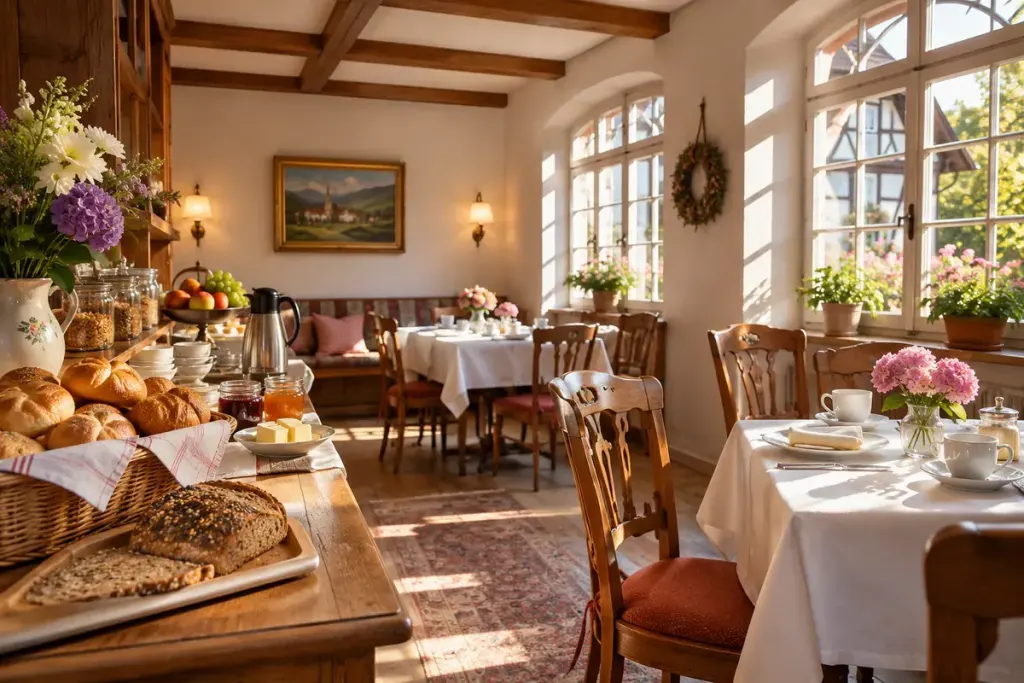
You find a promising room, then notice “hotel garni” beside the property’s name. The useful clue concerns food service. In German accommodation terminology, a hotel garni offers lodging and breakfast, with drinks and possibly small dishes, rather than a full restaurant operation.
That distinction appears in the IHK Mittlerer Niederrhein’s accommodation definitions. It describes a type of establishment, not a complete list of what your individual reservation includes.
Breakfast offered is not necessarily breakfast included
Check the rate details. A property can offer breakfast while selling a room-only rate. The booking should tell you whether you are paying for breakfast, what it costs if added separately and whether the service hours fit your departure.
For example, a traveller leaving at 06:00 gains little from a breakfast room that opens later unless an alternative has been agreed. “We serve breakfast” and “we can provide something before your train” are two different answers.
Plan the evening as well as the morning
Use the label as a prompt to look at dinner arrangements, especially for a late arrival. Ask about nearby options that will actually be open on your arrival day. A restaurant shown on a map may close before you reach the hotel or take a weekly day off.
A compact pre-booking message can cover the practical points:
- Is breakfast included in this particular rate, and at what times?
- Is any evening food served on site?
- How does check-in work if arrival is later than expected?
- Can the property meet a stated dietary or accessibility need?
The last two questions are worth asking directly because “garni” does not answer them. It does not establish reception hours, the presence of a lift, the room’s accessibility or an allergy-handling procedure.
Keep the property’s written reply with the reservation. The term helps narrow expectations, but confirmed services and the conditions of the booked rate are what make the stay workable for your journey.