
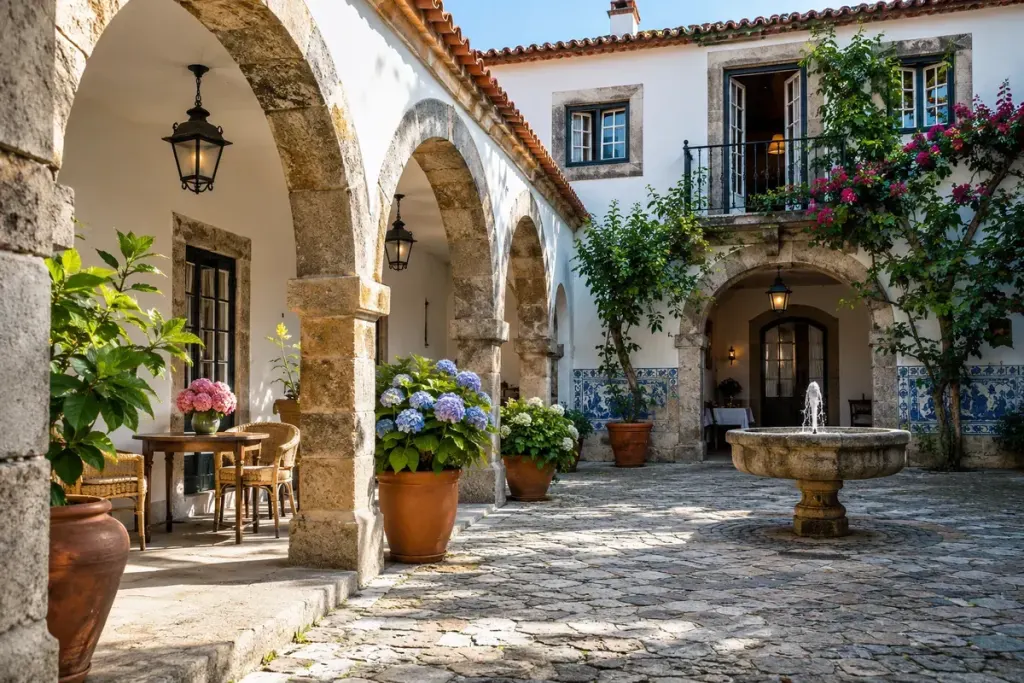
A corridor built for a convent and a courtyard belonging to a palace begin with different stories. When either becomes a hotel, the building gains another chapter rather than losing the earlier ones. Portugal’s pousadas offer an interesting way to explore that change of use.
The Pousadas de Portugal history dates the network’s beginning to the opening at Elvas in 1942. It describes a later expansion, during the 1950s, into historic buildings including castles, convents and palaces. That sequence matters: the network’s founding date is not the construction date of every property within it.
Keep three dates in your travel notes
When researching a particular pousada, separate the building’s early history, the conversion into accommodation and any later restoration. A photograph may show features from several periods at once. A doorway that looks old and a room described as newly restored are not necessarily contradictory clues.
For a hypothetical former convent, a useful note could have three blank lines: original religious use, adaptation for guests, and subsequent changes. Fill each only from the property’s history or a reliable heritage record. An unknown date is preferable to borrowing one from a nearby monument.
Look for what the new use asks of the old space
During a permitted walk through guest areas, notice how reception, dining and circulation fit within the building. A large hall may now accommodate a social function quite different from its earlier one. A former courtyard can remain an organising space even when the people using it have changed.
These are prompts for observation, not claims about any specific property’s original layout. Ask staff whether interpretation material or a heritage guide is available. Distinguish documented history from an appealing story repeated without a source.
Let the building deepen the visit
Choose one architectural feature to revisit at different times of day. The changing light may make a vaulted ceiling, an arch or a wall surface easier to appreciate. Respect private and restricted areas while looking.
The value of this kind of stay is more than sleeping near an old stone wall. It can give you time to understand how a place has been adapted, maintained and used by successive generations. A few carefully sourced notes will preserve that experience better than a generic description of “historic charm.”