
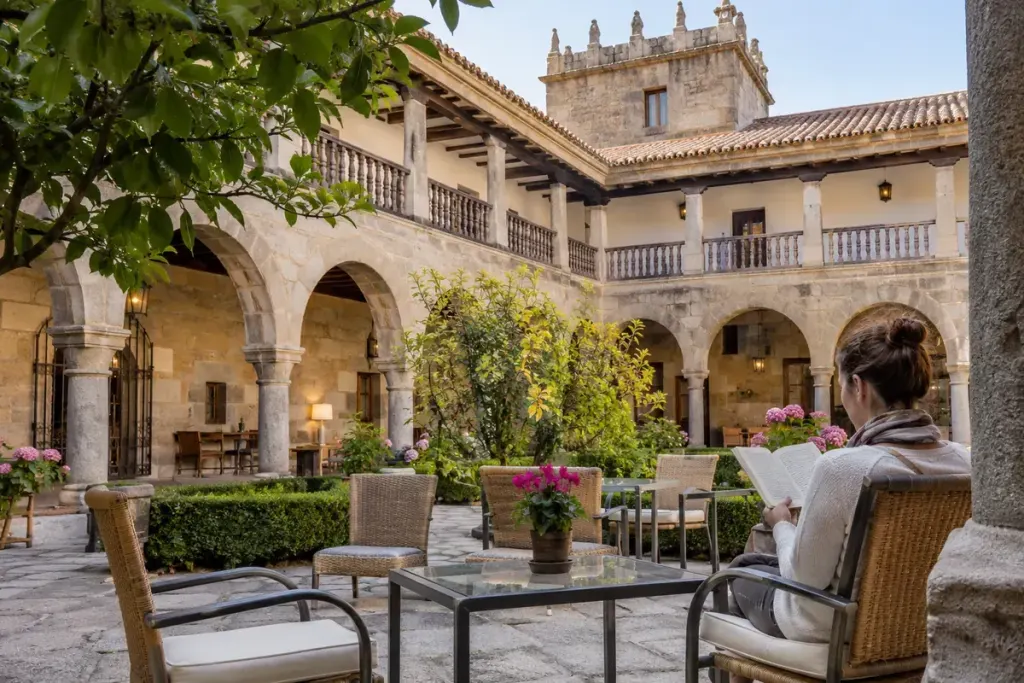
Seeing “Parador” in a Spanish itinerary can suggest a castle or monastery, but the useful first fact is simpler: Paradores is a hotel network. The name is not a universal grading system that makes every property the same kind of stay.
Paradores describes itself as a public company serving Spanish tourism, with a role in historic and cultural heritage and local development. Its own history of the network traces the first hotel to Gredos in 1928. Historic buildings are part of the appeal, but the network also includes other settings.
Translate the atmosphere into practical questions
A photograph of a monumental courtyard tells you little about the route from a particular room to breakfast. Before choosing a property, look at its location, room categories and current access information. A building’s earlier life can make the layout interesting without making every room equivalent.
For example, a traveller arriving by car should distinguish “parking available” from the actual place to unload luggage. Someone who needs step-free access should ask about the whole route to the room and facilities, not only whether the entrance has a ramp. Those questions belong to the individual property.
Likewise, a rural location can be attractive for a quiet stay while requiring more planning for an evening meal or a late arrival. Check current service times directly rather than carrying a detail from an older travel account into a new booking.
Compare stays on the same basis
- Use the same dates and occupancy when comparing room offers.
- Check which meals or other services are included.
- Read the cancellation terms for the actual rate.
- Confirm any access, parking or room-location requirement in writing.
The network’s history gives context to the stay; the property’s current information tells you whether it fits your trip. Keeping those two kinds of information separate lets you enjoy an unusual building without expecting its name alone to answer every practical question.