
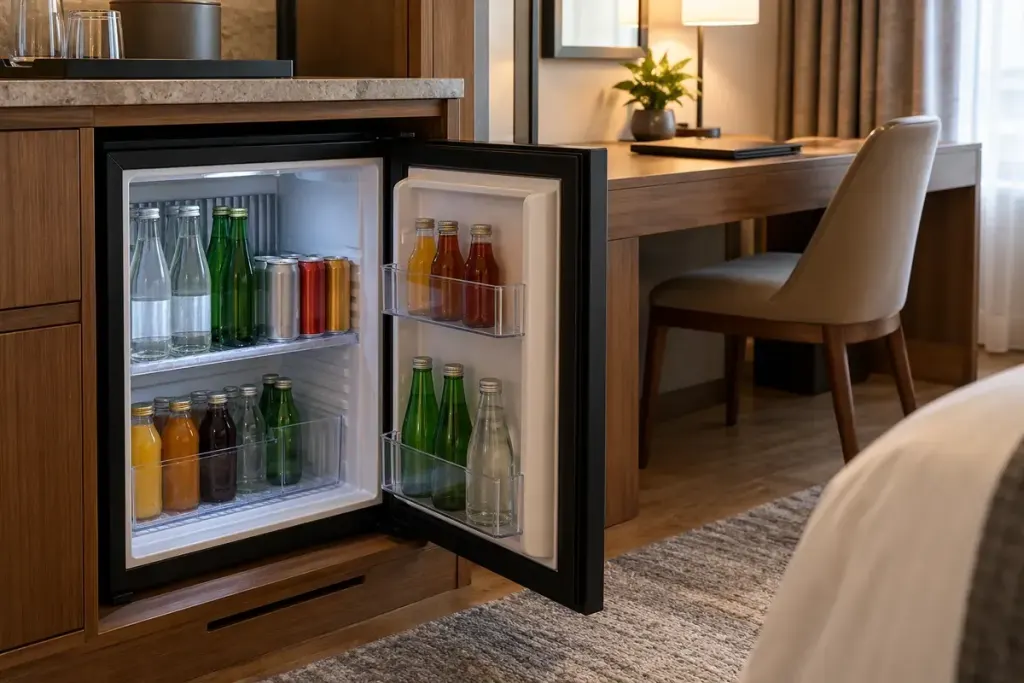
A small fridge appears in the room photographs, so you plan to bring breakfast ingredients. On arrival it is full of chargeable drinks, and a notice asks guests not to move them. The photograph showed a minibar, not necessarily storage available for your own food.
Ask the property before shopping. Useful questions concern permission, usable space and how charges are recorded. The answers can differ between room types within the same hotel.
Establish what the appliance is for
Does the property allow guests to place their own items inside? Can staff empty it if requested, and is there a charge for doing so? Does moving an item trigger a minibar charge, or does staff check consumption manually? Ask rather than experimenting with the contents.
Also confirm whether the appliance is intended and suitable for food storage. Do not assume that a drinks cooler maintains conditions appropriate for perishable food. Follow food-storage requirements and seek a suitable alternative if the hotel cannot confirm them. Medicines needing controlled storage require a separate discussion with a pharmacist and the property.
At check-in and checkout
If staff remove the hotel stock, confirm what has been removed and check the bill later. Keep your own items clearly separate from anything that remains. A photograph can help you remember the arrangement, but it does not replace the hotel’s agreement.
Avoid adjusting hidden controls, unplugging equipment or packing items against ventilation openings. If the unit seems faulty, report it through reception instead of trying to repair it.
For a short stay, buying only what you can safely use may be simpler than arranging refrigerated storage. Nearby breakfast options or shelf-stable items can provide a fallback without relying on an unconfirmed room facility.
The key booking question is specific: “Can I store these items in this room’s fridge?” That gives the property something useful to answer before you arrive with a bag that needs somewhere cold.