
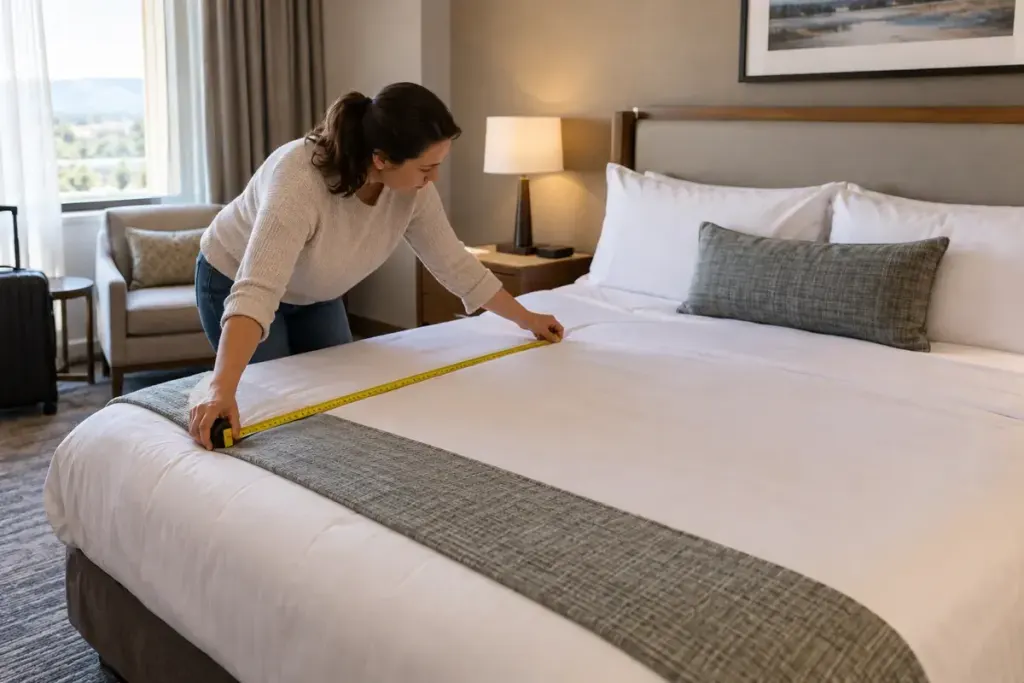
A room described as a double can sound perfectly clear until two travellers discover that they understood the word differently. Hotel bed labels are useful starting points, but they do not tell you the exact mattress size, how many beds are in the room or whether the arrangement can change.
For a booking where sleeping space matters, ask for dimensions in centimetres or inches. A number is easier to compare with the bed you use at home than a label translated across several booking websites.
Separate the mattress from the room type
Confirm the number of sleeping surfaces first. Two single beds pushed together, one large mattress and a bed with a sofa bed are different arrangements even when all accommodate two guests. Ask whether the listed configuration is guaranteed for your booked room category or merely available on request.
A practical message is: “For this room type, could you confirm the width and length of each mattress, whether the beds are joined, and whether our requested arrangement is guaranteed?” Include your dates and the room-category name so staff do not answer for another part of the property.
The space around the bed matters too
A wide mattress can still sit against a wall, making it awkward for one person to get out. If that matters to you, ask whether both sides are accessible. Photographs of a suite should not be used to judge a standard room, and a wide-angle image cannot provide a reliable measurement.
For an extra guest, check the actual sleeping surface: sofa mechanism, rollaway or existing bed. Confirm whether its use changes the available floor space and whether any extra charge is included in the total quote.
Keep the property’s written reply with your booking confirmation. If staff can only confirm the allocation on arrival, treat the arrangement as uncertain when deciding whether to book. The goal is a room that fits the travellers, not a more impressive bed label.