
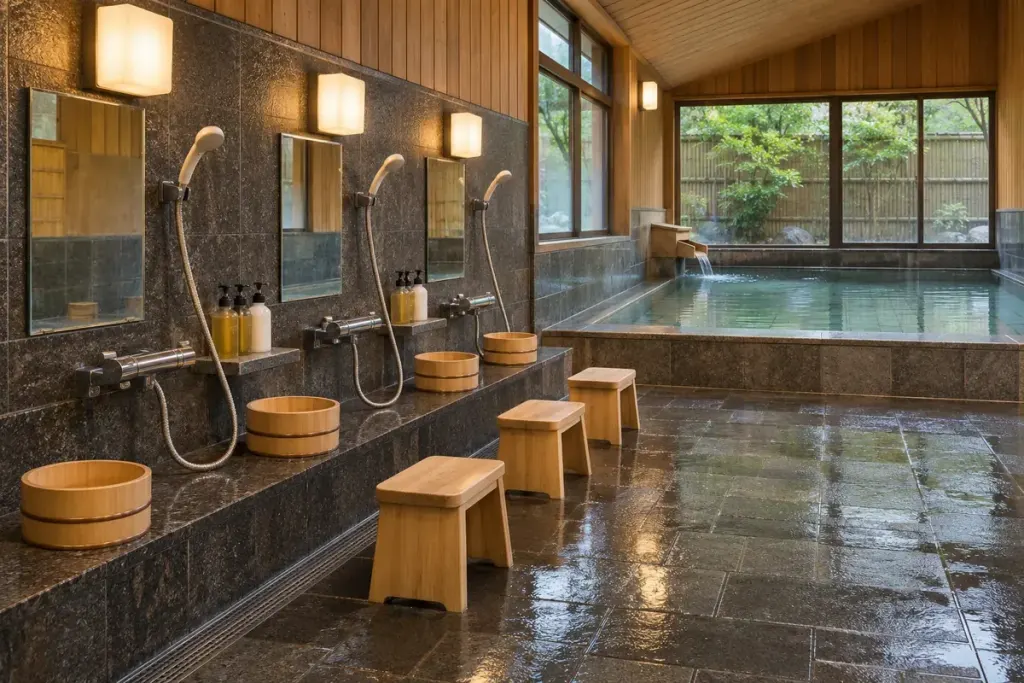
The communal bath can be one of the most memorable parts of a ryokan stay, but the first visit is easier when you understand the sequence. The bath is for soaking after washing, rather than the place to wash soap from your body.
The Japan National Tourism Organization’s onsen guide explains the washing-before-entry routine and the need to keep a small towel out of the bathwater. The exact facilities and house arrangements still come from the property you have booked.
Before leaving the room
Check opening hours, which entrance you should use and whether the bath is communal, reservable or private. Some properties change arrangements at particular times. Read the current signs rather than relying on the entrance you used the previous evening.
Ask about anything that affects your visit before reaching the changing area: accessibility, tattoos, children, swimwear or a medical concern about hot-water bathing. Policies vary, and a private bath may be an option where a shared one does not fit your needs.
At the washing station
Wash and rinse thoroughly before entering the pool. Use the provided station without spraying neighbouring bathers, and leave it tidy for the next person. Keep hair and towels out of the water. Do not take a phone or camera into a space where other people reasonably expect privacy.
If you are unsure where an item belongs, pause and ask staff. A brief question is easier than improvising with an unfamiliar locker, towel basket or bath entrance.
Make the experience comfortable
You do not have to remain in hot water to match someone else’s routine. Follow posted safety information and your clinician’s advice where relevant, and leave the water if you feel unwell. The purpose of learning the etiquette is to reduce uncertainty, not create an endurance test.
It is also worth checking whether the ryokan’s bath uses natural hot-spring water. A communal Japanese bath and an onsen are not automatically identical descriptions, even when the washing etiquette looks familiar.