
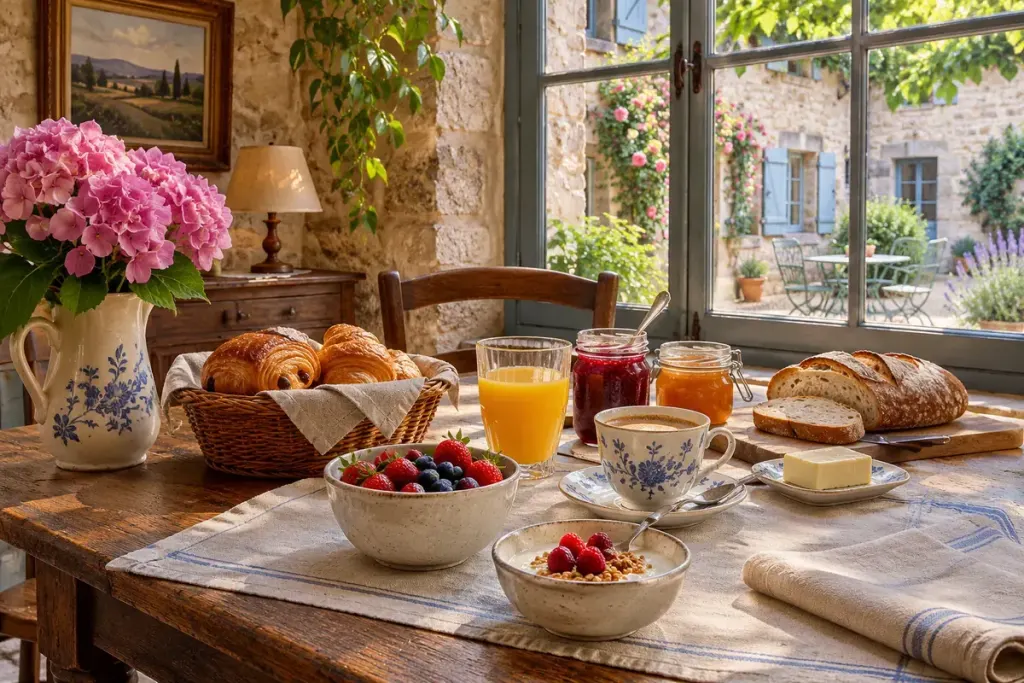
A stone farmhouse photograph can advertise very different kinds of stay. You might be booking an independent holiday property where you prepare meals, or a room in a host’s home with breakfast included. In France, the distinction between a gite and a chambre d’hotes helps you ask the right questions before comparing prices.
The French economy ministry’s consumer guidance distinguishes a chambre d’hotes from an independently furnished gite used by the guest. Gites de France describes its guest-room stays as including breakfast. Those starting descriptions still leave practical details to confirm for the actual property.
Decide what you want to do each morning
If you plan an early hike, ask when breakfast is served and whether an earlier arrangement is possible. If you want to cook, establish that the kitchen is for your use and check the equipment. Access to a shared kettle is not the same arrangement as an independent kitchen.
For an illustrative two-night trip, one traveller may value meeting a host over breakfast, while another needs flexible meals around a late return. Neither format is inherently better. The useful comparison is whether the daily rhythm fits the trip.
Read the private and shared spaces separately
Confirm the entrance, bathroom arrangement, parking and access to outdoor areas. A photograph of a terrace does not establish that it is reserved for one room. If stairs, pets or a particular arrival time matter, ask about them directly rather than relying on the accommodation label.
Check what is included in the quoted total: linen, cleaning, meals and any applicable charges. An evening table d’hotes meal, when offered, should not be assumed to be included simply because breakfast is.
Save the property’s written answers with the reservation. The French terms are useful clues to the type of hospitality, but the confirmed booking details decide how much independence, shared space and host contact your stay will actually involve.