
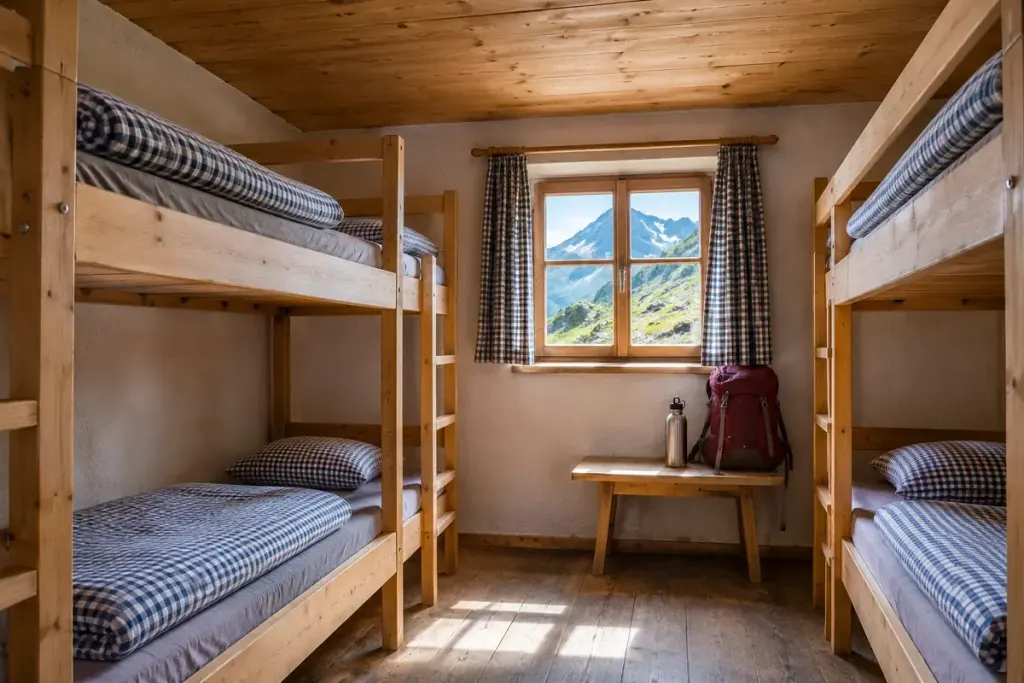
A staffed mountain hut may provide a meal and a bed while still asking guests to organise their stay very differently from a hotel. Arrival depends on a route, sleeping space may be shared and the evening routine can be shaped by weather, supplies and early starts.
Before booking, read the hut’s own current information and make sure it describes the season and type of accommodation you intend to use.
Confirm the kind of place you are booking
A reserved bed in a staffed hut, an unstaffed shelter and an emergency winter room are not interchangeable products. Confirm opening dates, whether a reservation is needed, how late arrivals are handled and what happens if weather changes the journey.
The German Alpine Club publishes hut and tariff rules and a hut-overnight packing guide. These are useful starting points for that network, but an individual hut’s instructions and conditions still need checking.
Make the sleeping arrangement explicit
Ask whether you have a room, bunk or shared sleeping-platform space. Confirm what bedding is supplied and what liner or personal equipment is required. Do not infer privacy, charging sockets or a hot shower from a photograph of a comfortable dining room.
If you have a disability, a medical need or a sleep requirement that affects the stay, discuss the practical details before travelling. An access statement should describe the route and facilities, not only whether the front door can be opened.
Plan the arrival as part of the reservation
- Check the route, realistic travel time and current mountain conditions.
- Know how to contact the hut and whether reception is reliable on the approach.
- Confirm meal times, payment methods and any advance dietary arrangements.
- Agree what you will do if the route or weather makes the planned arrival unsafe.
A reservation is not a reason to press on through conditions beyond your skills or equipment. Have a safe alternative and communicate a change when you can.
In a shared room, pack the items you need early or late where you can find them quietly. Keep passageways clear and follow the hut’s arrangements for boots, wet clothing and equipment. Those small choices make a communal stay easier for everyone and let the hut’s setting, rather than avoidable confusion, become the memorable part of the trip.